Rome Festivities

The festivities of the city of Rome in Italy. Not only Roman Catholic celebrations, but also Jewish and folkloric ones, for a tradition that has been going on for thousands of years.

Miniaturize Yourself in Italy!

Italia in Miniatura, or Miniature Italy, is a fun theme park for all ages that will miniaturize you!

Palio of Siena Tragedy

Should the Palio of Siena be suppressed? And what should happen to hippodromes?

Sicilian Cassata Recipe

A classic from Italian culinary tradition, a Sicilian dessert to prepare at home.

Italian Eco Friendly Aperitif

Sugheritivo is the eco friendly aperitif en-vogue in Italy since 2011. Bring a cork in, get a free glass of wine!

Wonderful Ischia Thermal Spas

Ischia has it all, and its thermal baths are a gift from the gods since ancient times.

Tuesday, October 2, 2012

Ten Most Beautiful Beaches in Sicily


Sicily is one of the most popular destinations of the Italian summer. It is often chosen as a destination by many celebrities, including Kate Moss, Tom Cruise and Katie Holmes, Leonardo DiCaprio, Uma Thurman, Princess Caroline of Monaco's daughter Charlotte, bringing paparazzi on the Sicilians shores. It is the ideal region in which to spend extra holidays, thanks to the high temperatures that bless it during the autumn season.

Second only to the Aeolian Islands, which hold a unique charm, here are the most popular mainland beaches. First of all is Marina di Ragusa. Among the best-equipped and most famous seaside resorts of the south-eastern Sicily, it is appreciated for its beaches of fine golden sand.

Not far away is the beach of Punta Secca, a small fishing village that locals call 'a sicca' due to a small formation of rocks in front of the beach.

Between Noto and Ragusa are also Calamosche, a small sandy cove, wedged between two rocky headlands and surrounded by dunes, with transparent waters. The Oasis of Vendicari is one of the wildest places in Sicily and a wildlife and nature reserve since 1984. The sea here is crystal clear.

To the west of the island, not far from Sciacca, is one of the most famous beaches (and there's a reason): Capo Passero. Here the sea is deep, but absolutely wonderful.

In the northwest of the island are concentrated three world-unique beaches: San Vito lo Capo, Scopello and Terrasini. The first two are located in a nature reserve called Lo Zingaro. Here the sand is white and fine and the sea is dotted with rocks. Terrasini, instead, is characterized by red rocks tinged with white.

To find other beaches worthy of note you need to go to the eastern part of Sicily, just below Taormina. The Isola Bella just below the city is one of the most beautiful places in Sicily. A two-kilometer long oasis with white sand and lush vegetation. It can be reached walking with low tide or by boat with high tides.

Its in front of the Aeolian Islands, in the province of Messina, that you can find one of the most popular holiday destinations: Capo d'Orlando. The beach is 8 kilometers long, and on the west coast one can enjoy a fiery red sunsets, while to the east you can admire the sunrise.

Finally, near Tindari there is Laghetti di Marinello, a fine white sand beach, characterized by the formation of some marine lakes, from which it takes its name. This beautiful coastal lagoon is a regional nature reserve.

Wednesday, May 30, 2012

Why visit Liguria?


Liguria is a small but beautiful coastal region in north-western Italy that really can show off the best that Italy has to offer. It has earned the nickname of ‘the Italian Riviera’ but it has a bit of everything- beaches, mountains, countryside and mouth-watering food. It’s no wonder that the region is popular as a holiday destination for tourists both from Italy and abroad.

Those looking to relax on the beach are spoilt for choice in Liguria, with a mixture of sandy and rocky beaches available. Pebble beaches are great for walking the dog and can be found at San Lorenzo al Mare. Those who want to stay dry on land and play some volleyball should head to the district of Diano Marina, where many beaches feature such facilities.

Liguria is also great for outdoor sports with so many possibilities. The Arroscia valley is a must-do for hikers, climbers and trekkers, and it’s even possible to do some mountain biking here. Back at the coast one can try their hand at sailing, surfing and diving. If you are feeling really adventurous, para-gliding is sure to get the adrenaline pumping whilst boasting striking views. For something even more exhilarating there is the chance to go canyoning and really get wet!

Liguria is not all about the outdoor life, but it is a region which places a lot of importance on food. You will find the usual pizza and pasta which Italy is known for, but Liguria has many more specialties to offer. The region claims to have olive oil even better than that from Tuscany and the legendary pesto also originates from the region. Focaccia is a popular snack for the locals and being on the coast, the seafood is exceptionally fresh and a common part of their diet. Seasonal vegetables that grow in the area include the infamous truffles, artichokes and asparagus. The cuisine is a real highlight of the region that should be sampled!

Like many other Italian regions, Liguria is rich in history, art and culture from medieval and Renaissance times. The capital of Genoa is home to many interesting museums and churches as well as a royal palace. There are many old castles, forts and ruins scattered around the whole region which can take you back in time. Close to San Remo lies the infamous Villa Hanbury, a must-see botanical garden with thousands of tropical species. The beauty and historical importance of the region of Liguria has been recognized by UNESCO, who have declared various UNESCO World Heritage Sites in the area- part of the old town of Genoa and the ‘Cinque Terre’, 5 small neighbouring villages which offer stunning scenery and interesting flora and fauna.

With so much to see and do, it’s worth staying for more than a few days. It would be wise to rent a holiday house in Liguria as a base and explore different areas in the region, with the prospect of something new and exciting awaiting you every day. So what are you waiting for? A holiday in Liguria awaits you!

Tuesday, March 6, 2012

FIve Specific Tips on Renting A Holiday Home in Italy


When looking for a place to stay in Italy, many people think about going to a hotel or those people on a smaller budget, a hostel. However, more and more tourists are looking at renting accommodation in Italy. Here are some tips on what to look for in your next holiday home.

Reviews
There should be reviews of all the holiday homes by past guests. If there are all positive reviews, then it will put your mind at ease and you can book your accommodation. If the reviews are negative, have a read why, maybe the price of the house/apartment is lower which means not everything is 100% perfect.

Additional costs
Make sure there are no hidden fees in the rent. Some places may expect you to pay for cleaning and will charge your credit card after you have left the place. A lot of rental companies will ask for deposit and you should get this back once you have left the accommodation in a good state.

Personal touch
Due to the economic crisis there has been an increase in the number of people renting their holiday homes. Those that have advertised their homes on a holiday rental site will normally be the home owner. Drop them an email and ask them a few more details about the place. Also check to see if they will be there to greet you. Some owners leave a welcome basket for their guests which is a nice touch.

Amenities in the local area
You should look to see how far the apartment is from the city centre. For example when looking for apartments in Rome you do not want to be crammed in a tiny flat, and the only view is of your neighbour's bedroom. Sometimes, it is worth renting a place a few streets away in the quieter part of town, such as the area near the Vatican.

Genuine site
As there has been an increase in the number of holiday homes, there are a lot of different sites advertising the accommodation, some genuine, others not. Holiday rentals.co.uk, worldwide-accom.com and ownersdirect.co.uk are some of the more established sites. If you know someone who has tried a new site and they have had a great holiday, it may be worth checking it out as well.

There is a lot of choice out there, so make sure you do your research when looking at Rome accommodation rentals when you next go on holiday.


Robin is a freelance travel blogger, writing about places to visit in Europe and renting apartments in Paris , Rome and London.

Wednesday, February 29, 2012

Five Reasons to Rent a Holiday Home in Italy


Next time you are heading over to Italy, instead of booking yourself into a hotel, why not think about renting an apartment when visiting Italy's capital. Here are five reasons why you should look at renting a holiday home in Rome.

Cost
It is much cheaper to rent accommodation than stay in a hotel especially if there is a large group of you. You can get an apartment/villa with bedrooms plus a kitchen and lounge whereas for the same price in a hotel, you would just have the bedroom. Sometimes it can work out as much as 50% cheaper renting accommodation than going for a hotel, especially if you go off peak. Holiday owners will want to fill up their flat/house as they incur costs as well.

Eat when you want
You are not bound by the meal times at the hotel. You can buy food from the local markets from wherever and whenever you want. If you choose to make an Italian meal for your housemates, you can do so and you have a kitchen and lounge to host them.

Fun for the whole family
If you have children, renting a holiday home means you don't need to worry about the kids causing a scene in the hotel restaurant. Of course if your children are well behaved, this is not an issue, but you do not have to worry about whether the hotel is child friendly or not and the kids will also have more freedom to do what they please. If you have pets, some holiday homes will allow you to bring them with you for the duration of your stay.
When in Rome, do as the Romans do
Renting an apartment in Rome gives you access to the main tourist attractions but also lets you enjoy your stay as if you lived there. You get to live with Italian neighbors, be part of their community, maybe if you are lucky, get invited over for an authentic Italian meal.

Flexibility
Unlike the package holidays, there is no set schedule when renting a holiday home. You choose when you want to get up, go and visit the sites, when to eat your meals. You are in control of your holiday and why shouldn't you be, you have worked hard for it.
There are a number of reasons for renting Rome accommodation apartments instead of the usual trend of staying in a hotel. Make sure you research the holiday you want to ensure you have the vacation of a lifetime.

Robin is a freelance travel blogger, writing about places to visit in Europe and renting apartments in Paris, Rome and London.

Sunday, February 5, 2012

Vegetables and Genitalia in The Italian Language


Languages sometimes are very funny. We had Italian friends from Naples staying over during the weekend, and I took advantage to become more acquainted with bad words and politically-incorrect Italian idioms.

You might think why a lady like me should have such necessities, as foul language is certainly misconstrued and would level me with the uneducated ones, also degrading my entire family and friends up to the fourth generation! After all, polite New England ladies know what's best. Ok, enough of the Jane Austin parade.

Even if we were to live the 19 hundreds all over again, I'd be counting among the irreverent ones, because I find bad words to be just hilarious! They are funny, liberating, witty, and Italian has about 7 million of them! Gosh I wish I were born in Italy, commanding the language like those ten-year-olds across my house. When I hear them say some "parolaccia", which means "bad word", I always jot down whatever I can understand, then ask my children or look it up on the Internet, hoping Google will correct my bad spelling.

Idioms are the funniest and I find that the top of the chart is taken by words that describe female and male genitalia. There is a whole wide variety of about 60 words for the male sex organ and around 90 for the female one! At least, this is what Benigni says, and I tend to trust him. It must be said that he astounds the majority of Italians, who can nevertheless manage more than 30 idioms for each sex.

I will not list the strong words here, but just those that refer to vegetables and cute animals. Why vegetables and cute animals? I have my theory. Somehow, associating vegetables and cute fauna with sex organs has made it easier for Catholic Italians to talk about them in colloquial terms, without having to use uncomfortable scientific words. On the other side, strongly sexually charged words may not be proper, especially for children, therefore little animals and veggies came to the rescue.

All in all, a little cute sparrow cannot remind of sex. The female sex is called "Passera", or "Passerina" or "Passerottina" for kids, which means little sparrow. Just as a little pea pod cannot be associated to nothing else than the baby male organ, "Pisellino". However, growing up he will have his pea pod replaced by a cucumber. That is what the adult male sex is called, a "Cetriolo"! But females growing up leave the fauna world for the flora, and their "Passerina" gets replaced by a "Patata", or potato. But female babies can have a "Patatina", or a small potato.

Cucumbers and birds have little in common, but somehow adult male genitalia are also called "Uccelli" or birds. Maybe as a reminder that one day they all came from a "Passera". Which reminds me that Italians also call that a "Gattina" or kitty, something English speaking folks are more familiar with.

Somehow birds and female genitalia are related in Italy, since another word for the adult sex is "Tacchina" or hen. But I might have to take that back, since it is also often referred to as a female mouse, or "Topa".

Male organs are more in tune with fruit and vegetables. The "Banana", same as in English, is another synonym for the "Cetriolo". But again comes an animal to make me take back what I just said, since men also have the "Pesce", or fish. Care to mention some species? You may call it an "Anguilla" or eel. Which reminds me of a snake, indeed "Serpe" is another name. Nevertheless, fava beans are in the game too, albeit with the entire pod, giving males a "Fava".

My Neapolitan friends also told me that it can be called a Babà which is a typical pastry from Naples (see picture). And to end on a sweet note for females too, I'll add the last cute name. "Fragolina" or strawberry, my favorite.

There are many more, of course; hundreds, if you also add regional variations and recent additions, but I guess this will give you a good insight. Beware of these words when you are speaking Italian or are in Italy.

Never complain out loud at the restaurant when your boyfriend eats your strawberry sitting on the piece of cake!

Friday, February 3, 2012

Romantic Places to Spend Valentine's Day in Italy


"Amore" is in the air everywhere in Italy. Its beautiful cities, lovely countryside, gorgeous coastline, and charming Italian villas are just waiting to serve as the perfect backdrop to the most romantic Valentine's Day you may ever spend in your life. Forget France, Italy has as much to offer if not more, for the hopeless romantics of the world looking for Valentine's Day getaways.

In terms of sheer beauty, few places can beat Italy's simply stunning Amalfi coast, with its many charming towns and gorgeous beaches. For a truly romantic and special Valentine's Day, book a room in Il San Pietro Di Positano. Every room in this hotel, which seems to have been carved into the jagged cliffs, boasts breathtaking views from a private terrace. Depending on the room type, prices can range between 420 and 980 Euros per night. You will have to book well in advance if you want to spend Valentine's Day in this hotel, but no worries. There are many lovely Italian villas, just as stunning, available on the Amalfi coast in which to celebrate Valentine's Day.

The radiant beauty of Lake Como managed to charm the charmer himself, actor George Clooney, who settled down near this lovely body of water. For your Valentine's Day stay, you may want to book a room in the lakeside Grand Hotel Tremezzo, which offers stunning views of the Grigne Mountains. Depending on the type of accommodation you desire, rooms run about 250 to 1,500 Euros and should be booked well in advance of a planned stay.

With its beautiful bridges and lovely buildings, Venice is one of the best cities in the world for a Valentine's Day getaway. Although a gondola ride through this city's canals may sound corny, it is still such a wonderful, romantic way to spend time with a lover. In addition, Venice is filled with cute little restaurants and lovely hotels full of character. Unfortunately, Venice does have some drawbacks. Lovers will need to book hotels well in advance of Valentine's Day, since in some years the city's Carnevale celebration may be going on at the same time. If so, rooms will be even more expensive and harder to get than usual. Try looking for Italian villas in the area, as well, which may be cheaper and easier to find than a hotel room.

Tuscany is yet another very romantic place perfect for a Valentine's Day celebration. It boasts beautiful rolling hills, scenic countryside and the area is especially known for having great Italian villas for rent. Lovers can choose to take a cooking class together in this region, which is famous for its delicious cuisine, or spend a day admiring artwork in Florence. More active types may want to climb up the Leaning Tower of Pisa, which costs 15 Euros, or soak in one of the area's hot springs. “Vino” lovers will find a large number of wineries to visit. Whatever the fancy, Tuscany offers couples plenty of ways to celebrate their love together.

Though all did not end well with Romeo and Juliet, romantics are still drawn to Verona and the home that supposedly belonged to the doomed Juliet. It is from this home's balcony that Juliet cried out to the night for her love, Romeo. A ticket to visit this house is 6 Euros. Afterwards, you and your loved one can walk through the city's plazas and streets or hire a horse-drawn carriage near the Roman Arena to take you on a romantic ride. At the end of the day, retire to a lovely Italian villa, which is the perfect way to end a lovely day in this very romantic city.

Wednesday, February 1, 2012

A Guide to UNESCO World Heritage Sites in Italy


Located on a peninsula in the Mediterranean, Italy has a long and glowing history. For those staying at one of the many fabulous Italian villas/Hotels or seaside resorts, some of the best Italian holiday ideas include visits to UNESCO World Heritage sites like these:

Agrigento - A leading ancient Greek city in southern Sicily dating from the late 500s BC. Spectacular Agrigento is near two rivers and also looks over the sea. Much of the historic town and elaborate temples for Greek gods are still intact today. The structures are impressive and excavation continues.

Amalfi Coast - This coastline is included in the lists of World Heritage sites because of its natural Mediterranean seashore beauty and its towns and settlements that hold true to traditional culture. Art and architecture is carefully preserved in villages that are adapted to the terrain like Ravello and Amalfi.

Assisi - The first known settlers in Assisi were the Umbrians in about the year 1000 BC. The hilltop town is located below Subasio Mountain. Assisi was the hometown of Saint Francis, who founded his Fransiscan Order of monks in 1208 AC. The large, famous church built in his honour was finished in 1253.

Caserta Royal Palace Complex - The vast grounds and palace were started in 1752 by Charles the VII of Naples. The Enlightenment style architecture of the palace complex was the work of the talented Luigi Vanvitelli. Lavish interiors greet the eye. The surrounding parklands, pools and forest are all beautifully maintained.

Castel del Monte - In Andria of southeast Italy, Emperor Frederick II constructed the castle in the 1200s combining Gothic, Islamic and Oriental influences in the architecture. The precise geometric shape and structure of the military stronghold stands proudly today on its hill near Santa Maria del Monte's monastery.

Florence's Historic District - Rome colonized the town in 59 BC, called Florentia. Florence became a leading city of the Renaissance in the 1400s and 1500s showcasing works of greats like Botticelli, Giotto and Michelangelo. The incredible medieval architecture of Florence is seen in buildings such as the Church of Santa Croce.

Pompeii and Herculaneum - In 79 AD, the killer volcano Vesuvius erupted over Pompeii and the nearby resort town of Herculaneum. Pompeii was more damaged than Herculaneum and both have been extensively excavated, especially Pompeii. The towns were discovered in the 1700s.

Rome City Centre - According to legend, Rome was founded in the mid-700 BC by Remus and Romelus. The capital of the Roman Empire and the historic headquarters of the Catholic Church, Rome has hundreds of well-known buildings, structures and monuments. Incredible art is seen in constructions built through the centuries like bridges, columns and palazzos.

Venice - In the 400s, Venice was built on almost 120 small islands, the metropolis is a maze of valuable historic architecture. It was also a maritime power in the 900s and is known for its lagoon and canals today that are teeming with water vessels of all types.

Verona - An ancient city with amazing architecture from various periods over the last 2000 years, Verona in northern Italy was inhabited by tribes for hundreds of years. Then, in the first century BC it was colonized by Rome. The town is famous as the place that inspired Shakespeare's play, Romeo and Juliet.

Conclusion
The world treasures described above provide a wealth of education about Italy and the world in general. Italy has more UNESCO World Heritage sites than any other country on the globe. Nothing can beat a first-hand look and exploration of these locales.

Friday, January 27, 2012

Cruising Italy


When thinking about holiday ideas, individuals should consider the vast amount of options for travelling in and around Italy. Cruises are a great option for seeing many of the sites around the coast line of Italy, as well as inland through day trips. It is possible to stay at Italian villas before or after a cruise to see more of the Italian countryside. Imagine being able to see the Mediterranean, Adriatic, Ionian and Tyrrhenian Seas, as well as the beautiful Italian coast line, from the balcony of a cruise ship.

There are many cruises around Italy that travellers might be interested in enjoying. Venice and Rome are major ports of call in the country of Italy, so expect many cruises to either begin or end in these locations. Once you are in Venice or Rome, you can begin cruising to a number of destinations in Italy.

There are short cruises, generally lasting two to three days, down each vertical coast of Italy. From Venice you can cruise down the Eastern coast to such locations as Ancona and Pescara. Ancona is a port town that has many restaurants and an easily navigable downtown area for dining and shopping. Pescara is Abruzzo's largest city and is known for its beautiful beaches. Many of these shorter cruises end up at the tip of Italy or in Sicily, which attracts visitors due to its rich history and cuisine.

Short cruises on the Western coast of Italy, departing from Rome, stop in such destinations as Palermo, Naples and Portofino. As Rome is located in the middle of the coast line, many cruises circle up around the city when travelling around Italy. Day trips in Palermo include such activities as touring ancient palaces, churches, and castles. Naples is a beautiful destination known for shopping and dining. In Portofino visitors can visit fine dining establishments and take scenic walks in the protected natural areas around the city.

Travellers can expect to pay anywhere from $500 to $5,000 for a short Italian cruise (2-3 days). This depends on the type of accommodations desired, as they range from budget to luxurious, as well as the current deals available through cruise lines. There are many cruises that stop at many different locations, so it is recommended that travellers talk to travel agents and do research before purchasing tickets for this type of holiday.

In addition, there are also longer cruises that visitors can enjoy while holidaying. Longer cruises circle the entire coast line of Italy, even sometimes extending into neighbouring countries such as Greece, Turkey and Croatia. Longer cruises last anywhere from 5 to 20 days and can cost anywhere from $5,000 to over $20,000, depending on the type of travel and itinerary desired.

A common stop includes Sicily, where visitors can take in the rich history, art work, and delicious cuisine. Other stops in Italy can involve day trips through the Tuscan countryside, visits to specialists in cured meats in Salermo, and the Leaning Tower in Pisa. Examples of stops in other countries include Dubrovnik, Croatia, which has marble walls, streets, and a glowing presence, while Santorini, Greece offers surreal cliffs, white buildings, and spectacular sunsets.

No matter which type of cruise travellers choose to partake in Italy, they are likely to have a lovely holiday adventure. Italy is known for being a romantic country, so many honeymooners choose cruise options for their special trip. Travelling around the coast of Italy provides a unique perspective of the regional differences and variety of experiences available in Italy.

Monday, January 23, 2012

A Traveler's Guide to Palermo


Tucked into Sicily's northern coast on the Tyrrhenian Sea, the capital city of Palermo is an enticing jewel in Sicily's crown. The look of this exotic city combines European and Asian flavours, as ornate Arabic and Baroque styles contribute to the impressive architecture.

To get to the genesis of Palermo's history, reach back to the 8th century B.C., when it was settled as a port. In fact, its original name, coined by the Greeks, was "Panormos," which means "all port." Control of Palermo shifted from the Phoenicians and the Carthaginians to the Greeks, then the Arabs to the Normans. The history of many of these controlling civilizations can still be seen in its buildings; sometimes, many coexist on the same structure.

While organized crime is, unfortunately, entrenched in Palermo's history, it has been on a downswing since the turn of the 21st century. After key Mafia leaders and players were either arrested or otherwise deposed, the influence of the organization has experienced a significant change.

Palermo residents unite every year in early July to celebrate the feast of their patron saint, Saint Rosalia, a 12th century hermit credited with easing Palermo's terrible plague of 1624. The faithful process a statue of the saint through the streets while celebrations of food and music consume the area.

The city's Arabic past comes to life in the Vucciria. A market reminiscent of the casbah, it is the busiest market in Palermo. The buzz of the shoppers blends with the scent of spices and fruits in the scorching heat to make a truly unique treasure-hunting experience in the ruins of the Loggia district.

Visitors who love churches and cathedrals are spoiled for choice in Palermo. Palermo Cathedral, officially known as Saint Mary of the Assumption, is a grand marriage of Norman, Byzantine, Arab, Gothic, Baroque, and Renaissance architectural styles. Its tombs are the final resting place for Saint Nicodemus, Frederick II of Sicily, and Holy Roman Emperor Henry VI, among many others. The frescos on the ceiling of Santa Caterina are illusionistic, to go along with the rest of this visually impressive church. The Basilica of the Holy Trinity, commonly called the Magione, has a heavy Norman exterior which is softened by surrounding palm trees.

San Giovanni degli Eremiti was built on the grounds of a mosque in the 12th century. Easily recognizable by its red domes, "Saint John of the Hermits" features a Latin cross plan and a lush garden in its elegant cloister.

The Capuchin Catacombs make for an eerily fascinating diversion. The 8000 mummies inside range from monks to friars to surgeons to sculptors.

Palermo's famous opera house is Teatro Massimo, on the Piazza Verdi. It boasts perfect acoustics and holds the honour of being Italy's largest opera house. If you have seen the movie "The Godfather III," you have seen a bit of its interior as the movie's operatic climax was shot inside.

Even the city's everyday streets, where residents live stacked many stories high in apartments with laundry-draped balconies, are a feast for the senses. The constant hum of vibrant people living their lives under the Sicilian sun is an unforgettable experience for the traveller who enjoys seeing host countries off the beaten path.

Getting to know Palermo at a leisurely pace is easy if you choose to stay in one of the cheap villas nearby. Palermo villas offer the comfort of a hotel with the casual familiarity of a country cottage. When you stay in Palermo like a local, you can fully enjoy the character and history of this ancient and intriguing Sicilian city.

Friday, January 13, 2012

The Little Red Train On The Alps


Livigno is a spectacular mountain locality, especially dedicated to skiers. But that is not the only attraction of this Alpine resort. The surrounding area is full of spectacular landscapes to explore and activities to experience. Such as the romantic mountain train bringing you through out-of-this-world landscapes, glaciers and gorges. The train is friendly called the "Little Red Train".

For the Valtellina people, to talk about the "red train" is like talking about a dear friend.

This is because the Bernina Express departs from the center of the Valtellina, the town of Tirano, and because it is tireless with his slow pilgrimage through gentle valleys and high mountain passes to reach its destination in the heart of upper Engadina.

Tourists are fascinated by this train, and for many it is the most beautiful in the world. Getting on the Bernina Express Railway is equivalent to entering a theater with the landscape unfolding before your eyes. The stage offers a constantly changing spectacle. You can admire not only natural beauties, but also the spectacular railroad structure itself, with its bridges and loop tunnels, reaching at times impressive inclinations. Surely, the route contributes to the charm of this line, going from the Valtellina valley to the Val Poschiavo and then on to climb up among the glaciers and peaks of the Bernina, finally descending to ever-charming Engadina until Pontresina and St. Moritz.

This spectacular and unforgettable rail journey begins in Tirano, the terminus of the Milan-Sondrio-Tirano Italian railways track. The train consists of modern and comfortable coaches. It leaves this lovely city to begin a breathtaking journey, in winter just as in summer, on slopes of 70 per thousand (without rack) up to an altitude of 2253 meters above sea level, which is unique in Europe. After a few kilometers from departure a marvel suddenly strikes your eyes: it's the Brusio viaduct, an outdoor helical ramp. Beyond Poschiavo, the capital of the valley with its beautiful patrician houses, the traveler reaches Alp Grüm, a unique panoramic point on the Palu glacier.

After crossing the pass at an altitude of 2253 meters above sea level, Montebello offers the observer an impressive view of the Monteratsch glacier and the Bernina chain, 4 thousand meters high and covered with glittering eternal snows.

In Pontresina, a popular tourist resort and winter sports center, the line branches off to Samaden-Chur, which allows travelers to reach Central Switzerland and Northern Europe. A few more kilometers and you will come across the enchanting landscape of the Upper Engadine and reach the beautiful St. Moritz.

Wednesday, January 11, 2012

Sardinia and The Fantastic Beach of Orri


Italy has some of the most wonderful beaches in the Mediterranean and the world. And Sardinia has some of the most wonderful beaches of Italy. Therefore you can trust that your holiday in Italy will bring you to the most prized seaside localities with the best shores you have ever dreamed of. Orri is one if these beaches.

Set on the side of Sardinia that looks Italy, it can be found on the southern coast of Arbatax, from where it is about 8 km, while from Tortolì it is just 2 Km away.

Getting there
Go from Olbia to Siniscola through the SP125 or the new expressway to Nuoro and follow the indications for Lanusei and Tortoli. At the junction turn right towards the Lido Orrì and follow the road for a couple of miles along the beach.

The Beach
It is a famous and enchanting place. It is rich of many inlets each leading to delicious deserted beaches. Orrì is considered one of the most beautiful and cleanest beaches in Sardinia. The beach is very long and wide, nearly 16 km of coastline, characterized by fine white sand and shallow waters for about three hundred meters from the shore and a light blue color. The beach has a sandy bottom with white rocks polished by the time that can be found both on the beach and submerged by the water. The water has a characteristic iridescent blue color due to the sun light reflecting on the sea bottom.

Services
This is the usual meeting point for holidays in Ogliastra, and today this is the crown jewel of the town of Tortoli. The services are numerous and of any kind, from various rentals, kiosks, bars, street vending, and games for children. During lively summer evenings on the road that runs along the main beach there are street vendors, music and various entertainments. A visit to this beach is not to be missed!

Wednesday, January 4, 2012

Salento, The Heart of Apulia (Puglia)


Prehistoric monuments as a Dolmen and Menhir testify a thousand years of history. The natural environment is as diverse as it is beautiful, the green countryside and bare hills are covered with wheat, tobacco crops and olive groves, while the sea is the highlight of it all. The coast is high, rocky, rugged, dotted with caves and bays, while waters are rich in flora and fauna. All this is Salento. Perhaps most important of all is the story of its people who overcome famines and persistent poverty and now can offer their land to tourists with love and kindness.

The Territory
Once the Salento peninsula included the territory occupied by the provinces of Brindisi, Lecce and Taranto, but today this term has been used to include the geographical area of ​​Lecce, which is much smaller. The Salento stretches from the so-called "Messapian threshold" between Casalabate, north of Lecce, and Punta Prosciutto, north-west of Porto Cesareo, goes down to the Cape of Santa Maria di Leuca, and is limited by 220 kilometers of coastline overlooking the Adriatic and lonio Seas.

The Heart of Salento
Like any land, Salento has a heart, which is called Salento Greece. Its sunny villages, the dialect rich of Hellenic words, the spirit and tradition characterize this area.
Palmieri, Castrigiano of the Greeks, Corigliano d'Otranto, Lecce, Melpignano, Soleto, Sternatia and Zollino are a world apart, or rather what remains of a larger area known as the ancient Land of Otranto. This area was made Greek starting from the sixth century. It remained impenetrable to Latinization up to the eleventh century. The priests of this area continued to celebrate their Greek Orthodox rites up until the first half of the seventeenth century.

Suggested Tour
Take two or three days to dedicate to this part of Salento. The small villages made of white houses and beautiful sunny countryside open lands invite you to get lost in them while eavesdropping the so-called Griko dialect.
Then you can enjoy the Greek roots at the table with typical dishes of Greek derivation with Mediterranean aftertaste.
This is the most unexpected corner of Italy's heel. It's exotic and archaic character forces time to flow more slowly than elsewhere. The tour winds from Calimera to Soleto and you can travel it by car stopping every few kilometers at one interesting town or site.

The Climate
The climate of Salento is typically Mediterranean. Obviously a result of the mitigating effect of the sea, the peninsula provides exceptionally long summers, dry and sunny days overall for and average of 2600 hours of sunshine per year. The colder weather is mild and brief, and is felt differently depending on the area you are in, as there are several micro-climatic zones. The high Adriatic coast, between Otranto and Leuca, receives more rain than the one on the Ionian coast up to Gallipoli, where warm winds from North Africa prevail. The area north of Otranto receives Balkan influences that determine slightly lower temperatures.

Villas and Farmhouses
The Lecce Baroque period saw its prelude with cities being reborn, large countryside farms being built, bishops and local aristocrats promoting local building activity, church and castle artworks being produced in Castro, Cupertino, Gallipoli and Otranto. In the seventeenth century architects and master builders transformed urban spaces and created new sceneries where to place squares, churches and palaces.
The Baroque of Lecce is still elegantly shaping the capital and cities such as Alessi, Cupertino, Gallipoli, Leverano, Minervino, Morciano di Leuca, Muro Leccese and Presicce. Elegance and imagination remained during the following centuries, as many homes in Liberty style in Santa Cesarea Terme and Marina di Leuca testify. Moorish villas reaffirm the memory of the link with Middle East.

Monday, December 26, 2011

Christmas in Italy

Christmas in Italy has already changed a lot during the years. Many years ago there was no Christmas tree tradition, and a nativity scene was the only thing that was done. For some reasons, maybe the pro-American feelings that undoubtedly pervade the whole country, or maybe because is an easier decoration to prepare, the tree has become one of the most poignant Christmas images in Italian peninsula. Nowadays in Italy you most often find a nativity scene besides a Christmas tree.

Spending Christmas in Italy means to discover many traditions of the past, mostly tied to the countryside and the Catholic religion. These Holidays are paced by the various religious and pagan festivities that chase each other and come to a conclusion with Epiphany on January 6. Today is Saint Stephen, an it's a holiday. New year's eve and January 1st are also holidays. The greater majority go to work during the days in between these festive days, however some take vacation days to have a long weekend. Schools in Italy close on December 23 and open again on the first school day after January 6.

Epiphany is a small Christmas for children. It is a festivity tied to when the three wise kings arrived to Bethlehem to adore the newborn Jesus. Indeed epiphany means revelation. In this day Italians hang a stocking at the fireplace and await the arrival of Befana to fill them up with candies and small presents for good kids, and charcoal for bad kids. Befana is the name of the old and ugly lady that comes flying on a broomstick to distribute presents to kids. She embodies this festivity since the legend tells that when the wise kings knocked on her door asking for the direction to Bethlehem, she helped them, but refused to join their journey as she was busy with home chores. She later regretted it, and after gathering some presents for baby Jesus she immediately started chasing after the wise kings. But no matter how hard she looked for them, she was unable to find them. So she decided to look for baby Jesus in each house where there was a new born, and leave a present to each one in case that was going to be the one.

Italians are also very traditional, and never fail to celebrate Christmas with their family. They have a saying "Natale coi tuoi, Pasqua con chi vuoi", Christmas with your family, Easter with whomever, which gives the sense how this festivity is much more felt than Easter. Sometimes it is hard to stay with your and your spouse's family. Therefore Italians employ Christmas Eve as a good occasion to stay with one side of the family, spend Midnight there, which is officially Christmas, then the next day is spent with th eother side of the family.

There is little moving around during these festivities, as the majority stay at home. Some use these days as a holiday period, visiting the Alps or seaside localities with thermal spots such as Ischia. But this is not typically Italian. Therefore if you want to visit Italy after Christmas day, you will find quiet cities, especially on the 26. The days approaching New Year's Eve are a little busier, but calm is soon restored on January first until the Befana.

Saturday, December 10, 2011

Comacchio, The Small Venice


Comacchio is the most original and fascinating historical center of the mouth of the Po river. Its history is inextricably linked to the flourishing of activities such as fishing, lagoon fish breeding, processing of sugar cane and the production of salt, which is still well developed. Its hallmark is the Trepponti bridge in addition to other important monuments such as the San Cassiano cathedral, the Portico of the Capuchins and the ancient Sanctuary of Santa Maria in Aula Regia.

Comacchio is also called the small Venice, because the city was founded on the canals of the mouth of Po River Park, famous for the Lidi of Comacchio, which are very busy in summer.
But apart from the sea and the beauty of Emilia Romagna near Ferrara, Comacchio is a town to be discovered, even while surfing through the canals of the islands that comprise it.

Places of interest
Trepponti - This is the symbol of Comacchio, five large staircase on the channels that accommodate the passing tourists.

Bellini Building - This building is located near the Bridge of Sbirri and is a large building that houses the Art Gallery and many temporary exhibitions

Cathedral of Comacchio - In Piazza XX Settembre, is the Cathedral of St. Cassian, cathedral city

Clock Tower - This tower is one of the main monuments of the city and is located in the beautiful Piazza Ugo Bassi

Excursions and tours
There are many possible itineraries and excursions in Comacchio, but one that I recommend is the boat ride on the "Batana" (typical boats of the area). To take advantage of this free service, you must go to the docks in front of the old fish market.
Do not forget the itineraries of Comacchio on foot, by bicycle or by boat ride on the Po mouth.

Another important excursion that you have to take into consideration is the former saline extraction facilities. Large portions of salt lagoon that were abandoned and are now the safe landing for a community of hundreds Flamingos. These spectacular birds started populating the area after all salt extraction work ceased, which gave the area the deep serene and quiet character that Flamingos need to live and thrive.

Thursday, December 1, 2011

Trieste Guide


Trieste is one of the most beautiful Italian cities. It is spectacularly placed in front of the sea, nestled foothills. The beautiful nineteenth century buildings that line the waterfront testify to a past of great maritime traffics with the Austro-Hungarian Empire. Trieste has always been, and still is, a frontier town, both culturally and geographically: Slovenia is not far from the Carso heights leading there, and from where the Bora wind sweeps the city.

It is the capital of Friuli Venezia Giulia with about 210,000 inhabitants. Trieste is a fascinating and aristocratic city. It is the last city of northeast Italy, the extreme southern part of Central Europe, the first city in the new Europe at the same time. The three notations enable us to understand a rich fabric of history, art and culture linked to the world of technology and scientific research, and to nature that here shows only some of its most fascinating phenomena.

Really, you can not understand Trieste at a glance. Viewed from the sea, it appears in a semicircle between the promontory of St. Andrew, where the lantern rests, and Ripa. The bank is barricaded by a long row of houses and buildings. The row is interrupted by a flight of streets that are lost within the city. Only toward the Portonuovo, between two rows of buildings, the Grand Canal opens a hole in the heart of the city for about 300 meters, forming one of the most characteristic spots of Trieste: the casual walker is startled by the sudden view of ships in the middle of the city, unexpectedly appearing to those coming off the main street going into the Pontegrosso, Canal Grande, and the likes.

At the bottom of the canal stands a Roman-style church, St. Anthony, beside the church of the Greek schismatics, St. Spyridon in purely Byzantine style. Viewed from the sea, therefore, Trieste appears almost tiny. Two hills, springing from the heart of the city, San Giusto and San Vito, make believe here are two possible limits to the city. On the contrary, after climbing those two hills, the city rushes to occupy the valleys that open behind, fending a new assault on to other flanking hills, then continuing to grow between walls of rock, and the jolly vegetable gardens and groves. Therefore, there never is a single point of the city from which the observer can embrace the whole city.
According to many visitors, few Italian cities have such natural beauties as Trieste. Due to its enviable position, Trieste has always attracted many artists, who searched for their inspiration in its purple sunrises and fire sunsets. Byron, Charles Nodier, Carducci, are just a few.

Trieste shows the changing of times with ruins that attest to its Roman origins, its alleys in the old neighborhoods, the remains of its medieval walls, and towers, the patrician houses, now poor, battered, but still with a noble character, the legends carved on nude rocks, the wells in the courtyards, and the preserved tombstones with Latin inscriptions.

The city has experienced long years of political extremism, which has sometimes been national irredentism, sometimes a real clash of civilizations. The definitive passage to Italy in 1954 is still alive in the memory of Trieste, during a time when the return to the homeland appeared uncertain. Almost by a miracle in Trieste, just like in other border cities of transit, the constant psychological tension, dictated by the many political upheavals and uncertainties, refined intellectual sensibility and produced fine reflections of intellectuals born here, or that here found their creative habitats: James Joyce, Rainer Maria Rilke, Umberto Saba and Italo Svevo. The legendary Cafes of Trieste are imbued with memories of great conversations and discussions that took place within them. They happened at a time when politics and art, literature and philosophy were discussed in various languages, in a twilight world with an uncertain future that was darkly looming ahead.

Friday, November 25, 2011

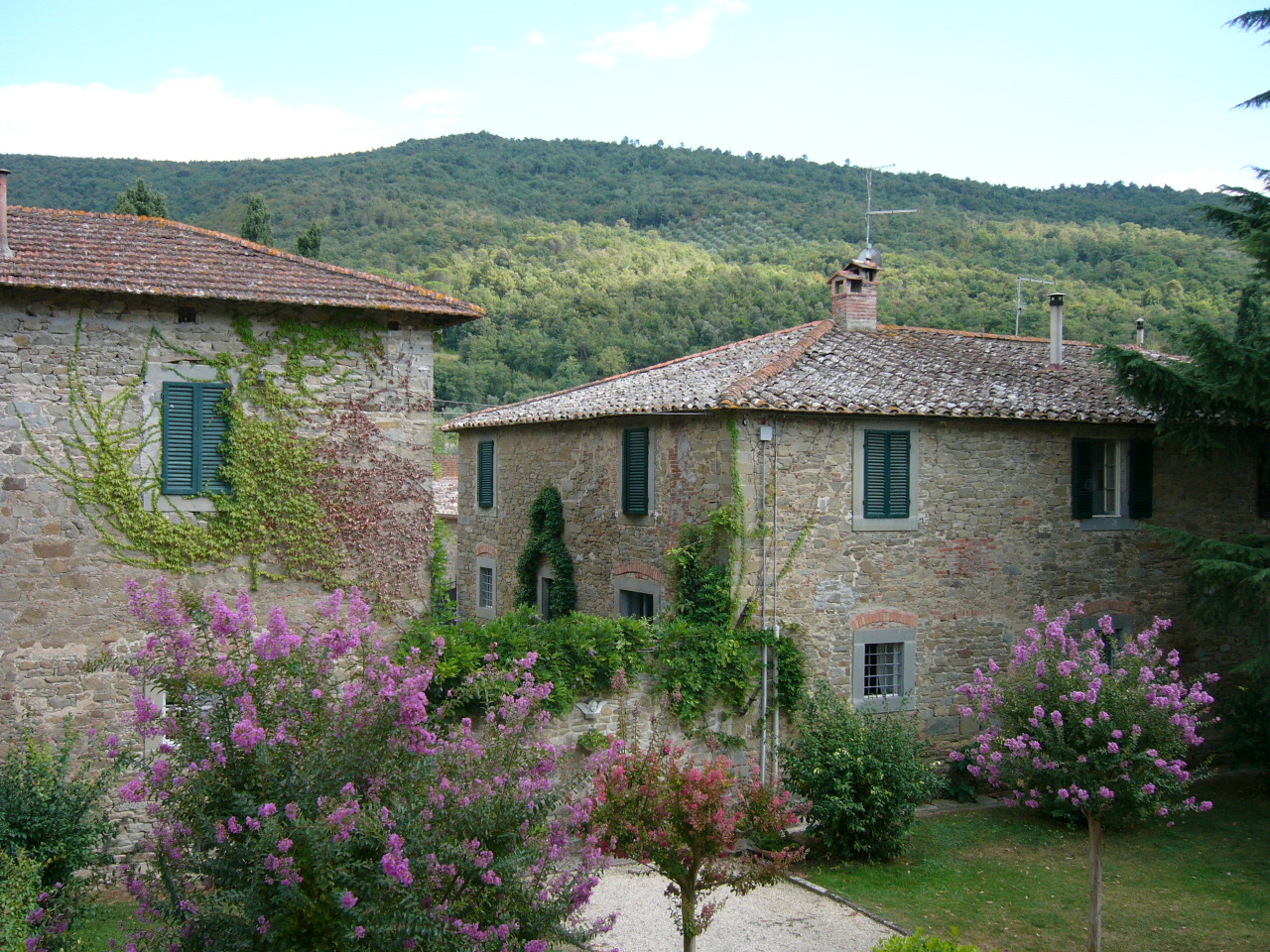
Tuscan Villas


I love Italian villas. They are so charming and full of romance. I am sure you know what I am talking about. The clean and fresh Liberty style of the Twenties, the earlier Neoclassic with its sweeping heights protruding to the sky, the Renaissance with its pastel colors and Italian gardens, the Medieval period, with its brick and stone walls all have a great charm.

But there is a kind of villas that I love the most. Perhaps it does not belong to any specific architectural style, or perhaps to the rural one, if such style exists. At any rate, I am talking about Tuscan villas, those rising in the middle of the luxuriant countryside on top of panoramic hills. Surrounded by well kept fields, woodlands, and water bodies, these villas have a very humble past, one deepening its roots in the land they were built on.

I am indeed charmed away by peasant farmhouses, those with stone walls, comfortably sitting on a green estate with their wide presence and low rising roofs. Large families of laborers lived on the first floor, while on the ground floor the stables hosted cows and horses, the tractors of the past. The floor dividing the stables from the living quarters used to be made of a layer of cotto tiles held by wood pillars and lines of studs. The relative thinness of such layer was achieved on purpose to allow the heat of the stables to flow to the upper floor. A thick ceiling would have isolated the heat in the stable.

These villas had not many comforts, and the Sunday morning bathing, religiously carried out prior to going to church, took place in the stables inside a vat, as this was the warmer room of the house. The fireplace on the first floor was the heart of the house. The large dining room and kitchen was built around the fireplace. It is here that most of the daily life took place. The fireplace was used to cook, it heated the dining room, and often accommodated six or more people inside during colder nights. Here the large family, and often neighbors, gathered to chat and carry on petty hand works and crafts impossible to do during the daylight time, which required to be in the fields. Wood and straw works served to the production of chairs, hats, kitchen utensils and to repair work tools. Stories and local news were told while manual work was carried out, and perhaps this is also how couples could meet each other and create new families.

Bedrooms did not have fireplaces, and the freezing cold beds where warmed up using bed warmers filled with ambers. The mattress was filled with dry corn leaves, and you can imagine that beds catching fire was not a rare happening!

Each time I enter into Tuscan villas I can feel the past. Although nowadays many were renovated and include all comforts, the original soul of the place is still present. At times I like to visit the ruins of an old farmhouse. At first I think it is a pity it was not restored as many other were, but then I can see the signs of abandonment and rediscover many original traits of a rural life that completely disappeared in Tuscany and Italy.

Monday, November 14, 2011

The Day After....Berlusconi


Traveling through a country does not only involve the often superficial activity of moving from place to place watching the world around you as if you were in a zoo. The real traveler, though short his visit may be, always tries to get to the ore of things, and however a hard job this is, it rewards her much in the end.

Traveling through Italy, or any other country for that matter, also involves talking about its political happenings. Even more so if you are armchair traveling while reading my subjective and instinctively written articles. It is the right way of traveling as it adds a third dimension to your point of view, giving you the instruments to get a rounder picture even on more ephemeral subjects I will be addressing in later posts.

The big news of these days is that, after Papandreu's leave of office in Greece, Berlusconi, Italy's (former) prime minister, resigned from his post to give way to a technical government headed by Mr. Monti.

What is a technical government? Non-Italians like me might have a hard time grasping this concept at first. It is a concept that speaks of Italian culture. This type of government, literally, is one set in place to "get the job done". Yes, it sounds absurd. What are non-technical governments there for, then?

First of all, governments elected through regular elections, such as the one that just fell in Italy, are supposedly formed by politically prepared people that have good leadership. They are managers, but need (economy, medicine, education, transportation) expert consultants to run the show. During the so-called technical government, one that was not elected by the Italian people but appointed by the leaving government and the President of the Republic, you just have these expert consultants running the show. It's like a company downsize, when marketing and PR are trimmed to fuel the R&D department.

Berlusconi's government was really (REALLY!) big in marketing and PR, however lacked much expertise, and the ability to pull it together into a synergistic strategy. The mix was composed of very young ministers, of whom many coming from the show business, others without a properly developed cultural background, but most importantly of frail alliances that always threatened the stability of the government and brought to a stalling legislative motor.

The Lega Nord party especially leveraged on its small number of seats that nevertheless allowed Berlusconi to remain the Prime Minister of Italy, while pushing towards its pet interests at the expense of the whole country.

This brings about the new electoral law that 1.2 million Italians dearly desire to the point of subscribing a referendum request on this matter. You see, in Italy at this stage any party is a big box that gets voted, then filled with all sorts of people. You elect a brand, not the people representing you. This was supposed to create stability in a country that up to the end of the 20th century had had more than fifty governments in less than fifty years with hundreds of parties represented. However, stability (and democracy) was compromised by allowing medium parties to partner up with smaller ones, so to reach the minimum required number of seats to gain the majority and govern. Problem is, these parties often come from very different ideological backgrounds. As a result, and to much dislike of electors, if one wants to vote for the left wing alliance, she will end up giving her vote also to center-right parties participating into the alliance. And if that alliance wins, then you will probably see "your" government act in favor of ideologies totally foreign to its original intents. And this is done just to foster stability (or keep their well-paid seat, as they say in Italy). Otherwise their political allies might abandon the crew and let the boat sink (as Lega Nord continuously threatened to do).

On the part of Italians, Berlusconi's demise was reason to carousel along the streets of many cities, as if Italy had won the World Cup. The vast majority of Italians could not stand his empty promises served on a plate decorated with sexism, racism, egocentrism, bad manners and bad taste anymore. On my part, I will remove the poll on this blog with the question "Do Italians Deserve Berlusconi?" and give it a resounding "no" as an answer.

Tuesday, November 1, 2011

All Saints Typical Italian Sweets


All Saints Day is celebrated on November 1 around the world the. It is a big celebration for Christianity, followed by November 2, the All Souls Day, a Christian event that traces its roots in ancient times.
Talking about seasonal cooking, every Italian region has tied these two celebrations to the table. For the most part these are recipes based on seasonal produce such as pumpkin, chestnuts, cabbage, pork, vegetables - especially beans and peas and and dried fruit. In Liguria, the custom is to eat chicken for All Saints to live up to the proverb "All Saints without beak, Christmas will be poor", probably tied to the fact that if you didn't have chicken to eat on All Saints day, by the end of December you would have had little food on your table.
The desserts, however, are certainly the most famous ritual food: in fact, each region has its typical sweet with a name recalling the celebrations.

Bustrengolo from Umbria
Ingredients: 350 g of corn flour, 100 grams of sugar, 50 grams of pine nuts, 100 g of raisins, 4 tablespoons extra virgin olive oil, 1 pinch of salt, 2 apples

Preparation:
Boil a large pot with 1 quart of salted water and add the flour as to make a polenta. Add the oil and mix together. Cook for about twenty minutes, then add the sliced apples, raisins, pine nuts and the sugar. Remove from heat and pour the mixture, which should be rather soft, on a buttered cake mold in a layer about 3 cm thick. Bake in a heated oven at 180 degrees and cook for about half an hour.
It should be eaten cold.

Colva from Puglia
In Puglia, particularly in the areas of Foggia and Barletta, it is typical of the Day of the Dead. The preparation of this cake is made of wheat and pomegranate.

Ingredients:
The kernels of a pomegranate, 1 can cooked corn, 150 grams of chopped walnuts, 150 grams of chopped almonds, white grapes, 100 g dark chocolate, sufficient mulled wine

Preparation:
Drain well the cooked wheat and place it in a bowl. Mix it with the pomegranate seeds, walnuts, almonds, the seeded and peeled grapes, chopped dark chocolate and add just enough mulled wine to mix all the ingredients into a smooth mixture. Serve in bowls.

Castagnaccio from Tuscany (for 6 people)
400 g of chestnut flour, Enough water, enough olive oil, 30 grams of raisins (soaked in warm water), 30 g of pine nuts, 3 tablespoons of sugar, 1 pinch of salt, 1 tablespoon rosemary

Preparation:
In a bowl mix the water with chestnut flour and sugar stirring with a whisk to prevent lumps. Your batter consistency should be quite liquid. Oil a cake mold of 25 cm in diameter with extra virgin olive oil and pour the mixture, pour on top a thin line of olive oil sufficing for two table spoons and finally sprinkle with pine nuts, raisins and rosemary. Bake in a heated oven at 180 degrees for about 40 minutes until the surface becomes dry and opposes resistance when pressed with a finger.

Saturday, October 29, 2011

The Flood in Lunigiana and Cinque Terre


It is such a disastrous sight to see such a lovely place like Cinque Terre being damaged by a massive amount of mud, debris, and water. The little borough of Manarola got almost completely destroyed by the avalanche that slided down from the mountain into the sea. The characteristic colored houses now all lay lifeless and gray of mud. It will take time to bring them back to their life, but the dead ones, buried under meters of sludge, will never be brought back again.

Aulla in Lunigiana is just one of the Tuscan cities to have been hit by the water wall. Each passing year I hear on the Italian news that such disasters could have been avoided. Massive deforestation along bank rivers, riverbeds not being cleaned to preserve river wildlife, concrete layering, wild urbanization, and climatic changes create each year a dangerous cocktail that never fails to explode. This cocktail produces similar effects all over the world. The more the damages produced, the more the intensity of the phenomenon.

Italy is a long and thin country, surrounded by sea, dotted with lakes, wrinkled up by rivers and mountain chains. Its ecosystem is extremely fragile, and constantly menaced by human mistakes and natural disasters such as the recent one.
Scraping rivers destroys wildlife, but not doing it produces blockages bringing to these extreme consequences. How to stop this vicious cycle?

I think there is little to do, as the contemporary strategy is that of building and making money, taking great risks though. The Italian proverb "meglio un uovo oggi che una gallina domani", or better an egg today that a chicken tomorrow seems to be taken very seriously in Italy.

Friday, October 21, 2011

The Riots of Rome and The Cloudburst


One might think that some sort of religious punishment hit Rome after so much violence struck the city during the "black-block" protests. The water that came down, a staggering 170 millimeters in just few minutes, was not absorbed by the sewage system, and washed away the memories of the riots altogether with the lives of two people.

I do not believe in anything like a superior punisher, even because those that needed to be reprehended for their nonsensical acts were far away from Rome during the cloudburst. To tell you the truth, the cloudburst was quite manageable, and it resulted in much greater issues than it should have just because the city did not spend as much as it should have to clean up its waste water system. In other words, the two deaths could have been easily avoided.

Actually, the mess that resulted from the rioting could also have been avoided. Some say the worst fringes of the protest should have been cracked down more violently, but who knows. From an outsider that relocated to Italy it is sad to see that a pacific protest with 98% of the people just dancing, marching or simply voicing their concerns is completely ruined by that 2% with no intention of building any constructive, meaningful point of view.

I wonder what makes people feel like thrashing such a wonderful city such as Rome. If I were marching along one of the magnificent boulevards in Rome I would jut stay all the time with my nose up looking at the monuments and palaces, no matter if ancient. The center of the city is just splendid, mixing a variety of Classic, Neoclassic, Liberty, Roman, and Medieval styles. It seems like you are spending time on a time machine. But can time be perceived on a time machine? Of course not. Time in Rome passes by so quickly that you can find yourself at the end of the day and not remember what you did and where you went to.

My advice: let others riot, and the sky pour water. You just head towards the nearest "Trattoria" and feast in front of a plate full of "Bucatini Amatriciana", "Bruschetta" or "Abbacchio". When you are done the sky will be clear and the streets safe again!

Share

Twitter Delicious Facebook Digg Stumbleupon Favorites